
10 Proven Ecommerce Website Optimization Strategies to Increase Sales
 June 1, 2026
 Puneet Bansal
 0 Comments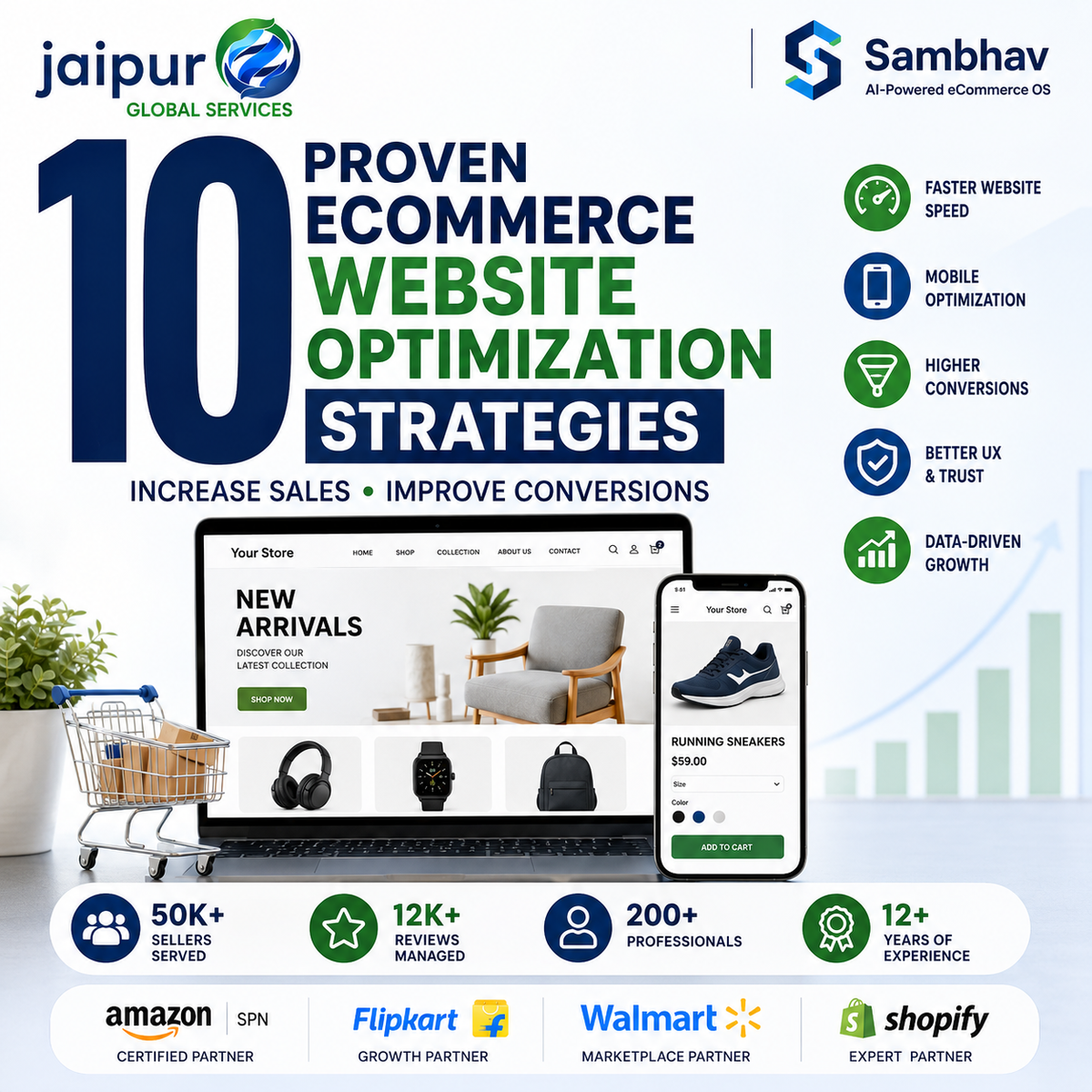
Getting traffic to your ecommerce website is only half the battle.
The real challenge is converting visitors into paying customers.
Many businesses invest heavily in advertising, SEO, influencer marketing, and social media campaigns, only to discover that their website struggles to convert traffic into revenue.
In today's competitive ecommerce environment, customers expect fast-loading pages, intuitive navigation, seamless checkout experiences, and personalized shopping journeys.
Even small improvements in website performance can significantly impact sales and profitability.
In this guide, we'll explore 10 proven ecommerce website optimization strategies that help businesses improve customer experience, increase conversions, and build sustainable growth.
Why Website Optimization Matters
A website is often the first interaction customers have with your brand.
Poor website performance can lead to:
- Higher bounce rates
- Lower conversion rates
- Cart abandonment
- Reduced trust
- Lost revenue
Website optimization helps businesses create smoother shopping experiences that encourage customers to complete purchases.
1. Improve Website Loading Speed
Speed is one of the most important factors influencing user experience.
Studies consistently show that slower websites experience:
- Higher bounce rates
- Lower engagement
- Reduced conversions
Ways to improve speed:
- Compress images
- Use content delivery networks (CDNs)
- Minify CSS and JavaScript
- Enable browser caching
- Optimize hosting infrastructure
A faster website creates a better customer experience and supports SEO performance.
2. Optimize for Mobile Users
Most ecommerce traffic now comes from mobile devices.
Your website should provide:
- Responsive design
- Mobile-friendly navigation
- Fast mobile performance
- Touch-friendly interfaces
- Simplified checkout processes
Mobile optimization directly impacts both conversions and search rankings.
3. Simplify Website Navigation
Customers should find products quickly.
Good navigation includes:
- Clear menu structures
- Search functionality
- Category organization
- Product filters
- Breadcrumb navigation
Confusing navigation often leads to frustration and abandoned sessions.
4. Improve Product Pages
Product pages play a critical role in purchasing decisions.
High-converting product pages typically include:
- Detailed descriptions
- High-quality images
- Product videos
- Customer reviews
- FAQs
- Comparison information
The goal is to eliminate uncertainty before purchase.
5. Strengthen Product Search Functionality
Many customers use search rather than browsing categories.
An effective search experience should provide:
- Fast results
- Relevant suggestions
- Auto-complete functionality
- Typo tolerance
- Product recommendations
Improved search functionality often leads to higher conversion rates.
6. Optimize the Checkout Experience
Checkout is one of the most common points of abandonment.
To improve conversions:
- Reduce form fields
- Enable guest checkout
- Offer multiple payment options
- Display trust signals
- Minimize distractions
A frictionless checkout process helps increase completed purchases.
7. Use Social Proof Strategically
Customers trust other customers.
Examples of social proof include:
- Product reviews
- Ratings
- Testimonials
- User-generated content
- Success stories
These trust signals help reduce purchase hesitation.
8. Implement Cart Recovery Strategies
Many customers add products to their cart but do not complete the purchase.
Recovery tactics include:
- Abandoned cart emails
- Exit-intent offers
- Retargeting campaigns
- WhatsApp reminders
- Personalized follow-ups
These strategies can help recover otherwise lost revenue.
9. Improve Website Trust Signals
Trust plays a major role in ecommerce success.
Important trust indicators include:
- SSL certificates
- Secure payment gateways
- Return policies
- Contact information
- Certifications
- Customer reviews
The more trustworthy a website appears, the more likely customers are to buy.
10. Use Analytics and AI-Powered Insights
Website optimization should be driven by data.
Monitor:
- Conversion rates
- Bounce rates
- Customer journeys
- Product performance
- Cart abandonment trends
AI-powered platforms like Sambhav Ecommerce OS help businesses gain deeper visibility into customer behavior and operational performance.
The Role of Conversion Rate Optimization (CRO)
Conversion Rate Optimization (CRO) focuses on increasing the percentage of visitors who complete desired actions.
CRO helps businesses:
- Generate more revenue from existing traffic
- Improve customer experiences
- Reduce acquisition costs
- Increase marketing ROI
Often, improving conversion rates is more cost-effective than increasing advertising spend.
How JGS Helps Ecommerce Businesses Improve Website Performance
At JGS Jaipur Global Services Pvt. Ltd., we help businesses build and optimize ecommerce websites through:
Shopify Website Development
Conversion Rate Optimization
Product Catalog Management
Website Performance Optimization
Marketplace Integration
Analytics & Reporting
Sambhav AI-Powered Ecommerce OS
By combining technology, data, and ecommerce expertise, we help businesses create websites that support long-term growth.
JGS Expert Insight
Many businesses attempt to solve sales problems by increasing advertising budgets.
However, if a website struggles to convert visitors, additional traffic often results in higher costs rather than higher profits.
The most successful ecommerce brands focus on both traffic acquisition and conversion optimization.
Small improvements in website performance can produce significant long-term revenue gains.
5 Action Steps You Can Implement Today
1.
Test your website speed using performance tools.
2.
Review your mobile shopping experience.
3.
Analyze cart abandonment rates.
4.
Add customer reviews and trust signals.
5.
Monitor website performance through analytics.
FAQs
What is ecommerce website optimization?
Ecommerce website optimization involves improving website performance, usability, and conversions to increase sales and customer satisfaction.
Why is website speed important?
Faster websites improve user experience, SEO performance, and conversion rates.
What is CRO in ecommerce?
Conversion Rate Optimization (CRO) focuses on increasing the percentage of visitors who complete desired actions such as purchases.
Does mobile optimization affect sales?
Yes. Most ecommerce traffic comes from mobile devices, making mobile optimization essential for conversions.
How can analytics improve website performance?
Analytics helps businesses identify bottlenecks, understand customer behavior, and make data-driven improvements.
What role does AI play in website optimization?
AI can provide insights into customer behavior, inventory performance, and conversion opportunities.
Conclusion
Website optimization is one of the most effective ways to improve ecommerce performance without increasing marketing spend.
By focusing on speed, mobile usability, navigation, product pages, checkout experiences, trust signals, and analytics, businesses can create shopping experiences that drive higher conversions and long-term growth.
At JGS Jaipur Global Services Pvt. Ltd., we help brands combine website optimization, ecommerce expertise, and AI-powered insights through Sambhav to build scalable and profitable online businesses.