
Amazon Product Research Tools: How to Find Winning Products
 September 8, 2026
 Yashwardhan Singh
 0 Comments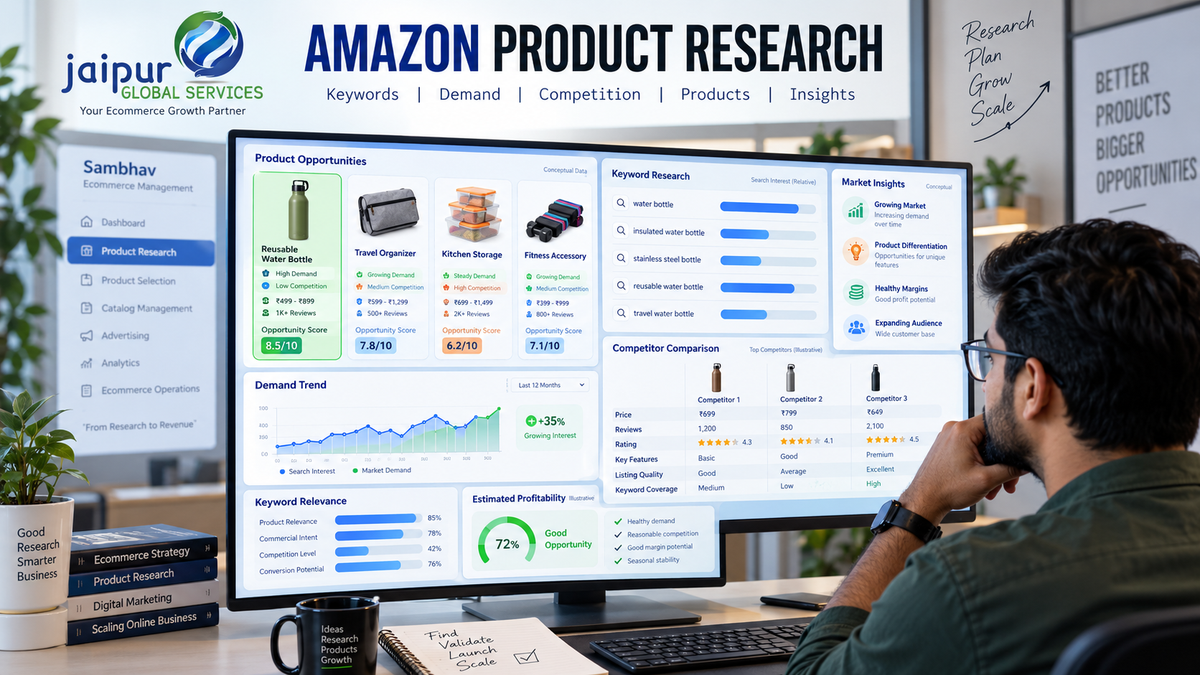
A seller spots a product doing well on Amazon, sources something similar, lists it — and watches it sit with barely any sales. Picking a product because it looks popular, or because you personally like it, is one of the riskiest ways to choose what to sell. Demand, competition, pricing, and customer expectations all matter, and none of them are visible from a quick glance at someone else's bestseller badge.
This is where amazon product research tools come in. Used properly, they help sellers study demand, competition, search behavior, pricing, reviews, positioning, seasonality, and potential profitability before committing money to inventory. No tool — however good — can guarantee a product will become a winner. What good research can do is replace a guess with an informed decision.## What Is Amazon Product Research?
Amazon product research is the process of evaluating potential products before investing in inventory, marketing, and marketplace operations. It means asking specific questions before sourcing anything: Is there enough demand? How competitive is the market? What price range do customers actually accept? Who are the major competitors, and how strong are they? What are customers complaining about in existing options? Are there real opportunities to differentiate? And critically — can the product generate a healthy margin once every cost is accounted for?
Sellers who skip this step and go straight to sourcing often find out the answers the expensive way, after inventory is already sitting in a warehouse. Taking time to genuinely research amazon products before committing is far cheaper than learning from a slow-moving SKU.
What Are Amazon Product Research Tools?
Amazon product research tools help sellers collect and analyze marketplace information faster than manual browsing allows. Common functions include product discovery, keyword research, search-volume estimates, competition analysis, price tracking, review analysis, sales estimates, product trend analysis, category research, and competitor research.
One point matters more than any specific feature: third-party tools generally provide estimates, not Amazon's actual internal data. Search volume, sales figures, and competition scores from outside tools are modeled approximations, not confirmed numbers from Amazon itself. Treating an estimate as an exact figure is one of the fastest ways product research goes wrong — use these numbers to spot patterns and compare relative opportunity, not as guaranteed facts.
Product Research vs. Keyword Research
Amazon product research is about finding and evaluating potential products to sell. Amazon keyword research is about understanding the actual search terms shoppers use to find those products once they exist. They're related but distinct, and both should work together:
Product opportunity → keyword research → competitor analysis → customer needs → product validation
A product with no real search demand behind it is a hard sell no matter how good the item is. Keyword research using an amazon keyword tool or amazon keyword research tool grounds product decisions in actual shopper language, not assumptions.
How Amazon Keyword Research Helps Find Product Opportunities
Good amazon keyword search tool usage can reveal what shoppers actually search for, which categories show consistent search demand, useful long-tail terms, which product features customers care most about, related product ideas, seasonal search patterns, highly competitive keywords to be cautious about, and less competitive niche opportunities worth a closer look.
Keyword demand alone doesn't prove a product is profitable. A term can get plenty of searches while the category remains saturated, low-margin, or expensive to compete in through advertising. Keyword data is one input to weigh alongside competition and cost analysis, not a standalone green light.
Key Factors to Analyze Before Choosing a Product
Demand — search interest, sales trends, and general market activity for the category.
Competition — competing products, brand strength, pricing patterns, review volume, and listing quality.
Pricing — the typical selling price in the category, and whether a workable margin is realistically possible at that price.
Reviews — reading positive and negative reviews on competing products to understand what customers value and where existing options fall short.
Product differentiation — genuine opportunities to improve quality, features, packaging, design, bundling, or customer experience.
Seasonality — whether demand holds steady year-round or depends heavily on specific seasons or events, which affects cash flow and planning.
Profitability — product cost, shipping, Amazon fees, fulfillment, advertising, returns, and taxes or other expenses, weighed together rather than individually.
How to Use an Amazon FBA Product Research Tool
A general workflow for amazon fba product research looks like this: select a category or niche, find potential products within it, review demand indicators, analyze the competitive landscape, study relevant keywords, review pricing across similar products, estimate potential costs and margins, analyze customer reviews on competing listings, identify realistic differentiation opportunities, and validate the product before investing significant capital.
No specific tool, regardless of how it's marketed, guarantees that a product identified this way will succeed — the tool surfaces information; the seller still has to evaluate it critically and make the call.
What Is an Amazon FBA Product Finder?
An amazon fba product finder is a tool designed to help sellers discover product ideas based on criteria like category, price range, estimated demand, competition level, review patterns, relevant keywords, and sales trends. These can be genuinely useful for surfacing ideas a seller might not have considered.
The important distinction is that these are research aids, not automatic product-selection systems. A product finder can narrow a list of candidates worth investigating further — it shouldn't be treated as a system that hands over a validated, ready-to-launch product without further human judgment.
How to Choose the Best Amazon Keyword Research Tool
There's no single best amazon keyword research tool that fits every seller — the right choice depends on your situation. When evaluating options, look at keyword database coverage, how Amazon-specific the data actually is (versus general search data repurposed for Amazon), reliability of search-volume estimates, competitor keyword research capabilities, long-tail keyword discovery, historical or trend data, ease of use, reporting quality, workflow integration, and cost relative to budget.
The right tool depends on your marketplace, category, budget, and how deep your research needs to go — a solo seller testing one product has very different requirements than a brand managing dozens of SKUs.
Common Amazon Product Research Mistakes
Choosing a product only because it appears popular, without checking the underlying data, is one of the most common errors. Others include relying entirely on estimated sales as if confirmed, ignoring competition strength, skipping reviews on competing listings, focusing only on search volume while ignoring margin, forgetting Amazon fees and fulfillment costs when estimating profit, not checking for seasonality, copying competitors without real differentiation, selecting products without understanding customer demand, and launching before validating the underlying economics. These mistakes tend to surface the same way — after money has already been committed, when it's harder and more expensive to correct.
A Simple Amazon Product Research Framework
Discover → Research → Compare → Validate → Calculate → Decide
Discover potential product ideas across categories that interest you. Research demand, competition, and keywords for each candidate. Compare the strongest options against each other. Validate the most promising ones against reviews and customer feedback. Calculate realistic costs and margins for what's left. Decide based on that full picture, not how appealing a product looked at first glance. This works best when product research, keyword research, competitor analysis, and profitability analysis are combined before any sourcing decision.
How JG Services Supports Ecommerce Sellers
Product research is only the starting point — once a product is selected, it still needs a well-built listing, ongoing catalog management, advertising, and performance monitoring to succeed. JGS (Jaipur Global Services) supports Amazon sellers with account management, catalog and listing management, and advertising — the operational work that begins after research ends, without claiming to guarantee product success on its own.
How Sambhav Can Help Sellers After Product Research
Product research tools help sellers identify and evaluate opportunities. What happens next — building and managing the catalog, running advertising, tracking performance — is a separate, ongoing operational challenge. Sambhav, JGS (Jaipur Global Services) in-house SaaS platform, helps sellers manage that side from a more centralized environment: catalog management, advertising, operations, growth analytics, CRM, finance and reconciliation, and market intelligence, brought together rather than scattered across separate tools.
Research products → Select products → Build/manage catalog → Advertise → Monitor performance → Analyze results → Improve operations
Sambhav doesn't automatically identify guaranteed winning products, and it doesn't promise specific sales, rankings, ROAS, or profitability — those depend on far more than any platform. What it supports is a more organized way to manage the operational work that follows product research, once a seller has actually validated and chosen what to sell.
FAQs
1. What are Amazon product research tools?
Tools that help sellers collect and analyze marketplace data — demand indicators, competition, pricing, reviews, and keywords — to evaluate potential products before investing in inventory.
2. What is the best way to research products on Amazon?
Combine demand and competition analysis, keyword research, review study, and a realistic profitability calculation, rather than relying on any single signal like popularity or search volume alone.
3. What is an Amazon FBA product research tool? A tool that helps sellers evaluate product opportunities specifically for FBA selling — typically covering demand estimates, competition levels, keywords, and pricing data for a given category.
4. How does Amazon keyword research help sellers?
It shows what shoppers actually search for, revealing genuine demand, useful long-tail opportunities, and how competitive specific search terms are — helping validate whether a product idea has real search interest behind it.
5. What should I look for in an Amazon keyword research tool?
Amazon-specific data quality, database coverage, competitor keyword insights, long-tail discovery, ease of use, and cost — weighed against your specific category and budget, since no single tool suits every seller.
6. Can product research tools guarantee a winning product?
No. They provide estimates and data to inform a decision, but market conditions, execution, pricing, and competition all continue to change — no tool can guarantee outcomes.
Conclusion
Successful Amazon product research requires more than finding a product with impressive estimated demand. It means genuinely evaluating demand, competition, keywords, pricing, reviews, differentiation opportunities, and the full cost picture together — not any single metric in isolation. Good research leads to a more informed decision, not a guarantee.
Once a product has been researched and validated, the work doesn't stop — it shifts to building and managing the listing, advertising, and ongoing operations. JGS (Jaipur Global Services) supports sellers through that next stage, while Sambhav offers a more centralized way to manage the catalog, advertising, and performance data that comes after product research ends. If you've validated a product and are now thinking about how to manage it well, it's worth exploring what a more organized setup could look like.