
Amazon Account Management: What Does an Amazon Account Manager Actually Do?
 November 4, 2026
 Yashwardhan Singh
 0 Comments
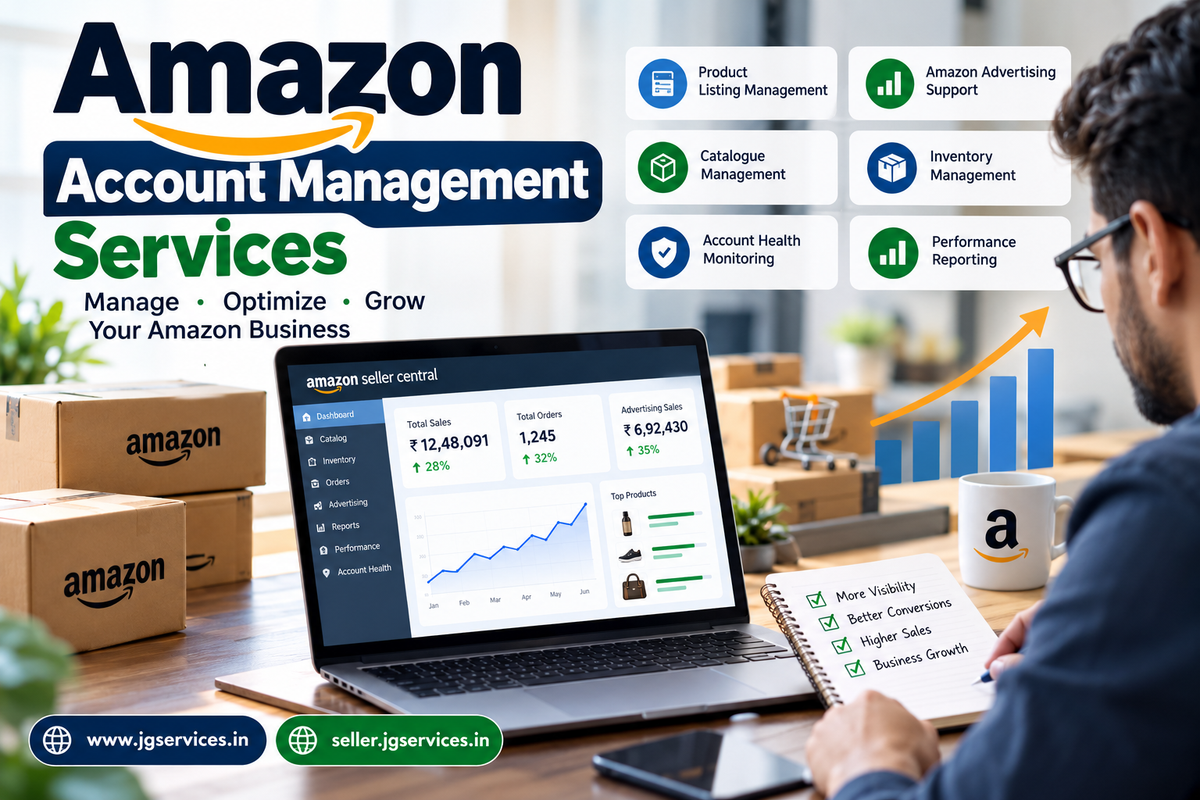
A new seller lists twenty products on Amazon and expects orders to follow. A few come in. Then a listing gets suppressed, stock runs out on the best seller, a customer complaint sits unanswered, and ad spend keeps going with no clear result.
This is how it goes for many sellers. Selling on Amazon is not just uploading products. It is daily work, and it never really stops. That is why many sellers look for an Amazon account manager, or for Amazon Account Management Services that can share the load.
What Is Amazon Account Management?
Amazon account management means looking after your Amazon seller account on an ongoing basis. The work covers your listings, orders, stock, account health, customer issues, ads, and sales performance. Sellers also search for it as "account management amazon", and it means the same thing.
Think of it like running a shop. Opening the shop is one task. Keeping shelves full, prices right, the counter clean, and customers happy is the real job. Account management is that second part.
What Does an Amazon Account Manager Actually Do?
An Amazon account manager is the person who handles this work for you, or with you. The exact tasks depend on the seller and the service. Here is what the role usually covers:
- Watches the seller account in Amazon Seller Central every day
- Checks account health and flags anything that needs attention
- Reviews seller performance and sales numbers
- Manages product listings and fixes errors
- Handles catalogue work, like adding products and updating details
- Tracks inventory so popular items do not run out
- Monitors orders and spots delays or problems
- Looks into account issues and helps sort them out
- Supports customer-related issues, such as questions, returns, and complaints
- Helps with ads and promotions where it is part of the service
- Keeps the account organised, so nothing gets lost
- Looks for ways to improve the Amazon business over time
Not every account manager does all of this. Some focus on listings. Others also cover ads or reports. Always ask what is included before you start.
Amazon Product Listing and Catalogue Management
Your listing is what a buyer sees before they buy. If the title is confusing, the images are weak, or the details are wrong, people move on.
Good listing work usually means:
- Clear titles that say what the product is
- Accurate descriptions and bullet points
- Sharp images that show the product properly
- Keywords that match what buyers search for
- Correct product details, like size, colour, and material
Catalogue accuracy matters too. Wrong data can cause returns and unhappy customers. JG Services (Jaipur Global Services) offers catalog management services for sellers who want help keeping product data tidy. It also lists A+ listing and content design for sellers who want better product pages.
Monitoring Amazon Account Health
Amazon shows sellers a set of performance numbers inside Seller Central. Together, these help you see how healthy your account is. They can include things like order defects, late shipments, and cancellations. The exact metrics and limits are set by Amazon and can change, so sellers should check Amazon's current rules.
Why does it matter? Small problems that go unnoticed can grow. An account manager watches these numbers on a regular basis. When something looks off, they can raise it early instead of waiting for a bigger issue.
This is one of the quiet but useful parts of the job. You may not notice it when it goes well.
Managing Orders, Inventory and Seller Operations
Running out of stock is one of the easiest ways to lose sales. Having too much stock is costly in another way. Someone has to keep an eye on both.
An account manager helps with daily Amazon operations such as:
- Checking new orders and shipping status
- Watching stock levels and flagging low items
- Following up on returns and refunds
- Keeping prices and quantities correct
Many sellers also use tools to see all this in one place. Sambhav, the seller platform from JG Services at seller.jgservices.in, brings order, inventory, and performance data together. It is a platform for seller operations, so it works alongside account management, not in place of it. You can read more on the Sambhav CRM and operations page.
Amazon Advertising and Sales Support
Some account managers also help with Amazon advertising. That can mean setting up campaigns, checking how they perform, and adjusting them over time. It can also mean planning promotions.
But this varies a lot. Not every account manager handles ads, and some services keep ads as a separate offer. Ask early whether advertising is part of the plan. JG Services lists advertisement management as its own service, which shows how some providers split the work.
No one can promise sales. Ads and promotions can help, but results depend on your product, price, reviews, and competition.
Why Do Amazon Sellers Need an Account Manager?
You can run an Amazon account on your own. Many sellers do, especially at the start. But as the business grows, the daily work grows too. An account manager can help with:
- Saving time. You spend less time inside Seller Central.
- Daily account work. Routine tasks get done on schedule.
- Fewer missed tasks. Someone is always watching.
- Updated listings. Content and pricing stay current.
- Performance checks. You see what is working and what is not.
- Support with account issues. You are not figuring it out alone.
- Focus. You can spend more time on products and planning.
Not every seller needs this on day one. If you have a small catalogue and plenty of time, you may manage fine. If you sell many products, or your time is stretched, help can make sense.
What Are Amazon Seller Services?
Amazon Seller Services is a broad term. It covers the different kinds of support available to sellers. That can include account setup, listing and catalogue work, advertising, design, account management, and finance support.
Many sellers do not need all of it. They pick what fills their gaps. JG Services offers a range of ecommerce services, such as ecommerce account management, advertising, cataloguing, design, and finance. It also says it is a registered Amazon Service Provider Network (SPN) partner. For Amazon specifically, it has a page on Amazon Account Management Services.
What Should You Look for in Amazon Account Management Services?
Before you choose a provider, check a few things:
- Scope. What is included: listings, catalogue, orders, ads, reports?
- Clear communication. Will you get regular updates in plain language?
- A named contact. Do you know who handles your account?
- Reporting. Can you see what was done and how things are going?
- Access and control. Do you keep full ownership of your seller account?
- Fit for your category. Do they understand your products?
- Honest promises. Be careful with anyone who guarantees rankings or sales. Nobody can.
- Pricing. Is it clear what you pay for?
Ask for examples of the work, not just a list of features. And talk to more than one provider before you decide.
How JG Services Can Support Amazon Sellers
JG Services, also known as Jaipur Global Services, is an ecommerce services company based in Jaipur. On its website at jgservices.in, it lists services for Amazon, Flipkart, Shopify, and Walmart sellers. These include account management, advertising, cataloguing, A+ content design, finance and taxation, and global sales support.
For sellers who also want a tool to track their operations, there is Sambhav at seller.jgservices.in. If you handle money matters yourself, JG Services also offers accounting and taxation services.
The right mix depends on your needs. Start with a clear list of what you want help with, then match it to what a provider offers.
Final Thoughts
Amazon account management is ongoing work, not a one-time setup. Listings change, stock moves, customers write in, and performance numbers shift. Someone has to keep watch.
An Amazon account manager can take much of that daily work off your plate, and the right Amazon Account Management Services can make operations easier to run. Know what you need, ask what is included, and choose support that fits your business.