
Multichannel Order Management: How Sellers Can Manage Orders Across Multiple Sales Channels
 September 24, 2026
 Yashwardhan Singh
 0 Comments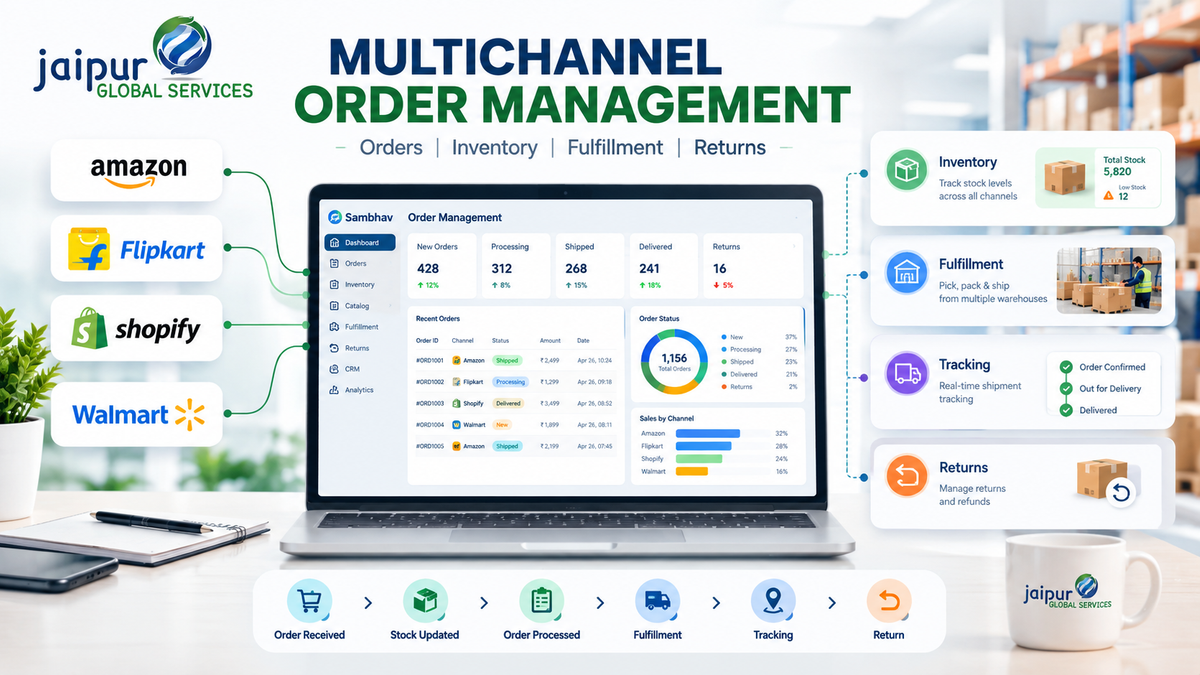
If you sell on Amazon, Flipkart, Shopify and Walmart, you know the problem. You receive orders from different dashboards. Stock looks okay on one channel and out of stock on another. Someone forgets to update a shipped order and a customer is now asking where is their package. Returns pile up in one inbox while order questions sit in another.
This is daily life for most of the multichannel sellers and it gets more harder as order volume grows. Multichannel order management is simply handling all these orders in a more organized, connected way, instead of running each channel like a separate business.
Many sellers reach a point where spreadsheets and manual updates stop working. That's usually when a structured system, or support from a team like JGS, starts to help.
What Is Multichannel Order Management?
In plain terms, multichannel order management means bringing orders from every sales channel into one workflow, so you can process, track, and fulfil them without switching between five different logins all day.
It connects the full order journey: orders come in, inventory is checked, the order is processed, fulfilled and shipped, tracking is updated, and if something comes back, the return is handled properly. Customer questions can then be answered with the full picture in front of you, not just one channel's version of it.
This is the kind of workflow Sambhav, the ecommerce seller platform from JGS, is built around — bringing orders, inventory, and related operations into one place instead of several disconnected systems.
Why Multichannel Sellers Need Better Order Management
When each channel is managed separately, small problems add up fast.
You end up doing the same task multiple times — updating stock on Amazon, then Flipkart, then Shopify. Manual entry means mistakes creep in. Inventory numbers stop matching reality, leading to overselling a product you don't actually have. Order processing gets delayed because someone has to check four places before confirming anything. Returns get missed. And when everything is scattered, you lose visibility into what's happening across your business.
None of this is due to sellers being careless — it's simply hard to run five channels well using five separate systems. This is one of the areas where JGS supports sellers with structured marketplace operations, helping bring some order to what can otherwise become a messy setup.
How Multichannel Order Management Works
The process is easier to understand when you break it into steps:
- Order collection – Orders from every channel are brought into one workflow instead of staying siloed.
- Inventory check – Before an order is confirmed, available stock is checked so you're not selling something you don't have.
- Order processing – The order is confirmed and prepared for shipment.
- Fulfilment – The order is routed to the right location and shipped.
- Tracking – Shipment and delivery status are monitored.
- Returns – Returns and refunds are tracked properly instead of getting lost.
- Customer communication – Questions and order issues are handled with the full order history available.
The exact setup depends on which channels you sell on, what integrations you use, and how your business is structured. There's no single template that fits every seller.
Order Management and Inventory Management Go Together
You can't really separate order management from multi channel ecommerce inventory management — the two are tied together.
If stock isn't synced across channels, you'll either oversell or hold back inventory unnecessarily. SKU-level visibility matters — knowing exactly how much of each product is available, where it's stored, and how fast it's moving. Fast-selling products need closer monitoring and quicker reorders; slow-moving stock needs a different approach entirely.
Getting this right usually needs consistent product data, which is where JGS Catalog Management Services come in — keeping listings and product information aligned so inventory tracking makes sense across channels.
What to Look for in Order Management Software
If you're evaluating multichannel order management software, a few capabilities matter most: order visibility across all channels, inventory synchronization, real-time tracking, proper return handling, fulfilment workflows, SKU-level tracking, one central dashboard, useful reporting, and marketplace connectivity for the channels you actually sell on.
Not every platform offers all of this, and that's fine — the right fit depends on your setup, not on picking whatever looks the most feature-packed.
Why Fulfilment Fits Into the Bigger Picture
Order management doesn't end once an order is confirmed. Multi channel fulfilment software matters because it covers what happens next — routing the order, coordinating with the warehouse, checking stock at the right location, tracking the shipment, and handling returns.
For sellers working across multiple locations, this gets more involved. Connected order and fulfilment workflows, the kind Sambhav is designed to support, can make this easier to manage, though actual delivery timelines still depend on your carrier, setup, and each marketplace's policies.
Choosing the Right System for Your Business
There's no single multi channel order manager that's "best" for everyone. It depends on your specifics: how many channels you sell on, SKU count, order volume, inventory complexity, which marketplaces you need to integrate with, reporting needs, return volume, team size, and how much you want automated versus handled manually.
A multichannel order management system that suits a small Shopify store won't necessarily fit a seller running high volume across Amazon, Flipkart, and Walmart together. Think about your own operation first, then look for a fit.
How JGS Helps Sellers Manage Multichannel Operations
Jaipur Global Services works with sellers across marketplace account management, catalog management, order and inventory workflows, advertising, analytics, and finance and payment reconciliation. If you're selling internationally as well, JGS Jaipur Global Services supports that side of things too, and sellers running Flipkart specifically can look at JGS Flipkart Account Management.
How Sambhav Helps With Multichannel Order Management
Sambhav is JGS's platform for bringing these workflows together — orders, returns, inventory-related operations, catalog, CRM, analytics, and finance and reconciliation, in one place instead of scattered across separate systems.
The idea is simple: multiple channels, centralized data, organized orders, better visibility into what's actually happening in your business. Sambhav isn't meant to replace each marketplace's own seller system — it's built to reduce how much you need to manage disconnected tools separately.
Common Multichannel Order Management Mistakes
A few mistakes show up again and again: managing each channel completely separately, not syncing inventory, using inconsistent SKUs, relying too heavily on spreadsheets, delaying order updates, ignoring returns until they pile up, not tracking fulfilment status, keeping customer communication disconnected from order data, and never reviewing channel-wise performance.
None of these are big problems on their own. They just quietly add up.
Conclusion
Good multichannel order management really comes down to keeping orders, inventory, fulfilment, returns, and customer communication connected instead of scattered across separate systems. As your channels and order volume grow, that connection matters more, not less.
If you want to look at how this could work for your own setup, you can explore JGS or check out Sambhav to see how the two come together for sellers managing multiple channels.