
Amazon FBA vs FBM: Which Fulfillment Model Is Better for Indian Sellers?
 August 26, 2026
 Yashwardhan Singh
 0 Comments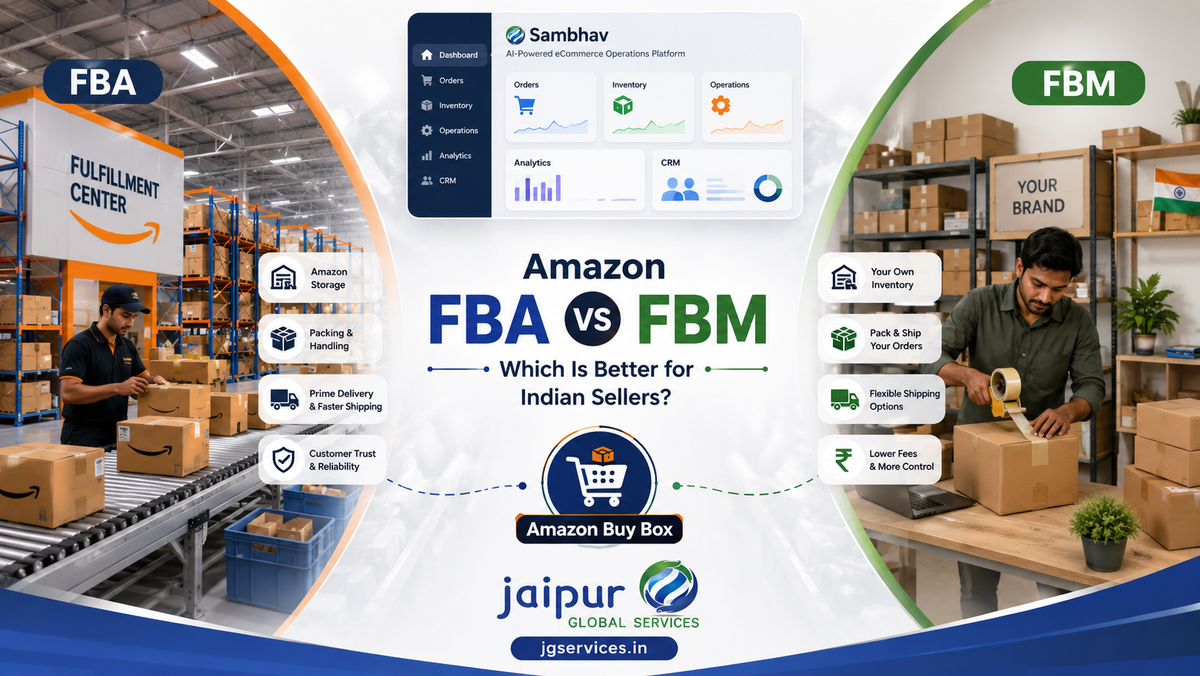
Choosing a fulfillment model is one of the most important operational decisions an Amazon seller in India will make. It affects your costs, delivery speed, customer experience, and — often overlooked — your ability to win the Amazon Buy Box. As competition on Amazon India intensifies, sellers can no longer treat fulfillment as an afterthought. The Amazon FBA vs FBM debate isn't just about logistics; it's about how efficiently you can scale while staying profitable.
This guide compares both models on the factors that matter and explains why fulfillment strategy plays a direct role in Amazon Buy Box performance — rather than declaring one model universally "better."
What Is Amazon FBA?
Fulfilled by Amazon (FBA) means Amazon takes over the physical side of order fulfillment. You send inventory to Amazon's fulfillment centers, and Amazon handles storage, picking and packing, shipping with fast delivery windows, customer service for fulfillment queries, and returns processing, including pickups and refunds in many cases. FBA listings also gain Prime eligibility in most cases.
For Indian sellers, Amazon FBA India offers a genuine operational advantage: no need for your own warehouse, packing staff, or courier tie-ups. Amazon's network handles the heavy lifting, and products gain Amazon Prime eligibility, which many customers actively filter for.
However, FBA fulfillment has trade-offs. Storage fees add up for slow-moving inventory, long-term storage penalties apply to stock that sits too long, and sellers have less control over last-mile packaging and presentation. For high-volume, fast-turning SKUs these costs are usually justified; for niche or seasonal products, they can quietly erode margins.
What Is Amazon FBM?
Fulfilled by Merchant (FBM) puts fulfillment responsibility back on the seller. You store your own inventory and either ship orders yourself or through a third-party logistics (3PL) partner. This means seller-controlled inventory, flexibility in choosing couriers and managing delivery timelines, direct customer-service responsibility for order and delivery issues, and greater operational control over packaging, branding, and handling.
Amazon FBM India is often preferred by sellers with bulky products, low-frequency SKUs, or existing logistics infrastructure. It avoids Amazon's storage and fulfillment fees, and lets sellers customize the unboxing experience or manage special handling directly.
The trade-off is consistency. Delivery speed under FBM depends entirely on the seller's own logistics, and missed delivery windows or poor packaging can hurt seller ratings. FBM listings can qualify for Prime through Seller Fulfilled Prime where eligible, but most FBM sellers operate outside the standard Prime badge, which can affect visibility with delivery-conscious shoppers.
Amazon FBA Fees vs Amazon FBM Costs
Rather than quoting exact figures (which change periodically and are best verified on Seller Central), it's more useful to understand the cost categories. FBA costs include fulfillment fees per unit, monthly and long-term storage fees, removal/disposal fees, and Amazon's packaging requirements. FBM costs include warehouse or storage rent, packaging and labor, courier or 3PL charges, staff for picking and dispatch, and return handling.
Neither Amazon FBA fees nor Amazon FBM fees are automatically cheaper. A compact, fast-selling product may cost less through FBA than an inefficient in-house setup. A bulky, low-margin product might be more economical under FBM, avoiding Amazon's storage charges. The right comparison happens at the product level, not the business level.
Amazon FBA vs FBM and the Amazon Buy Box
The Amazon Buy Box is the "Add to Cart" and "Buy Now" section on a product listing, and winning it is critical — most Amazon sales happen through the Buy Box, not a seller's individual offer page. The Amazon Buy Box algorithm treats fulfillment choice as only one of several inputs.
Buy Box eligibility depends on price competitiveness, seller performance metrics, order defect rate, shipping time, and fulfillment method together — so Amazon FBA vs FBM matters beyond logistics. FBA listings often have an edge because Amazon manages delivery and service consistently, and Amazon Prime eligibility influences purchases since many customers filter for Prime-badged listings. But FBA does not automatically guarantee the Buy Box: an uncompetitive price, poor availability, or weak account health can still cost you the win. FBM sellers can and do win the Buy Box by maintaining fast, reliable shipping, low defect rates, and competitive pricing — particularly through Seller Fulfilled Prime.
In short, Amazon Buy Box optimization requires looking at price, availability, account health, delivery experience, and fulfillment method together. How to win Amazon Buy Box placement comes down to competitive pricing, healthy inventory, and dependable fulfillment — whichever model you use.
When Is Amazon FBA Better for Indian Sellers?
FBA tends to work well when products are fast-moving with predictable demand, are smaller and easier to store (keeping storage fees manageable), and when sellers want to reduce daily fulfillment workload to focus on marketing or catalog growth. It also suits businesses prioritizing scalability across multiple SKUs, or categories such as electronics accessories, beauty, or fashion basics, where fast delivery and Prime eligibility drive conversions.
When Is Amazon FBM Better?
FBM often makes more sense for products that are bulky or heavy, where FBA storage and fulfillment fees run high, or for slow-moving inventory where FBA's long-term storage fees would eat into margins. It also suits products needing special handling (fragile items, custom packaging), sellers with efficient in-house logistics or a reliable 3PL partnership, and businesses that need greater fulfillment control — such as custom branding — or where FBA costs would negatively affect margins on lower-priced products.
FBA vs FBM: Which Is More Profitable?
Profitability under Amazon FBA vs FBM depends on SKU-level economics, not a blanket choice for the whole catalog:
Selling price → referral fee → fulfillment cost → storage/logistics cost → other costs → estimated margin
A small, lightweight product with steady sales often retains a healthier margin under FBA, since fulfillment fees are low and storage is efficient. A large or slow-selling item often retains more margin under FBM, avoiding Amazon's storage fees. Running this calculation per SKU is the only reliable way to know which model protects your margins.
Should Indian Sellers Use Both FBA and FBM?
For many growing sellers, the most practical answer isn't FBA or FBM — it's both, applied strategically:
- Keep high-volume, fast-turning SKUs in FBA for Prime eligibility and consistent delivery
- Keep slow-moving or bulky products in FBM to avoid unnecessary storage costs
- Use FBM as a backup during FBA inventory constraints or restock delays
- Evaluate fulfillment model SKU by SKU, reviewing performance periodically rather than locking into one strategy
This hybrid approach captures the strengths of both models while minimizing their individual downsides.
How JGS Helps Amazon Sellers Manage Ecommerce Operations
Making the right FBA vs FBM for Indian sellers decision requires visibility into performance, costs, and customer experience — which is where Jaipur Global Services (JGS) supports sellers as an ecommerce growth and marketplace management partner, covering catalog management, advertising, order and return management, buyer communication, and marketplace analytics to help build a strategy that supports profitability and Buy Box performance.
How Sambhav Can Help Sellers
Sambhav, JGS's AI-powered ecommerce platform, supports sellers managing day-to-day operations across FBA and FBM — with centralized order and CRM management, automated workflows, sales and performance analytics, real-time dashboards, inventory and pricing insights, and AI-powered recommendations.
Centralized data on orders, returns, pricing, and performance helps sellers spot which SKUs suit FBA fulfillment versus Fulfilled by Merchant, and track how fulfillment choices affect Buy Box competitiveness over time. Learn more on the JGS Sambhav product page.
FAQs
1. What is the difference between Amazon FBA and FBM?
FBA means Amazon stores, picks, packs, and ships your orders. FBM means the seller (or their logistics partner) handles storage and shipping directly.
2. Is FBA better than FBM for Indian sellers?
It depends on the product. FBA suits fast-moving, compact items; FBM often works better for bulky or slow-moving inventory where Amazon's storage fees would reduce margins.
3. Does FBA help with the Amazon Buy Box?
It can support eligibility through consistent delivery and Prime eligibility, but doesn't guarantee the Buy Box — price, availability, and performance still matter.
4. Can FBM sellers win the Amazon Buy Box?
Yes. FBM sellers can win it with competitive pricing, low defect rates, and reliable, fast shipping — especially through Seller Fulfilled Prime where eligible.
5. Is Amazon FBA profitable in India?
It can be, particularly for compact, fast-turning products, but profitability depends on referral fees, fulfillment fees, and storage costs relative to selling price.
6. Which products are better for FBA?
Smaller, lightweight, fast-selling products with predictable demand generally perform well, since fulfillment and storage costs stay manageable.
7. Can an Amazon seller use both FBA and FBM?
Yes. Many sellers keep high-volume SKUs in FBA and bulkier or slower-moving SKUs in FBM, adjusting the mix as performance data comes in.
Final Verdict
So, Amazon FBA vs FBM: which fulfillment model is better for Indian sellers? There's no single universal answer — but there is a practical framework:
- Choose FBA for fast-moving, compact products where Prime eligibility and consistent delivery drive conversions.
- Choose FBM for bulky, slow-moving, or low-margin products where in-house control matters more.
- Use a hybrid strategy, reviewing fulfillment choices SKU by SKU as your catalog evolves.
- Remember that winning theAmazon Buy Box depends on pricing, performance, and fulfillment working together — not fulfillment method alone.
The right approach matches your product mix, capacity, and growth stage — and gets reviewed as your business changes.