
Multichannel Ecommerce Fulfillment: How to Manage Orders Across Multiple Sales Channels
 June 1, 2026
 Yashwardhan Singh
 0 Comments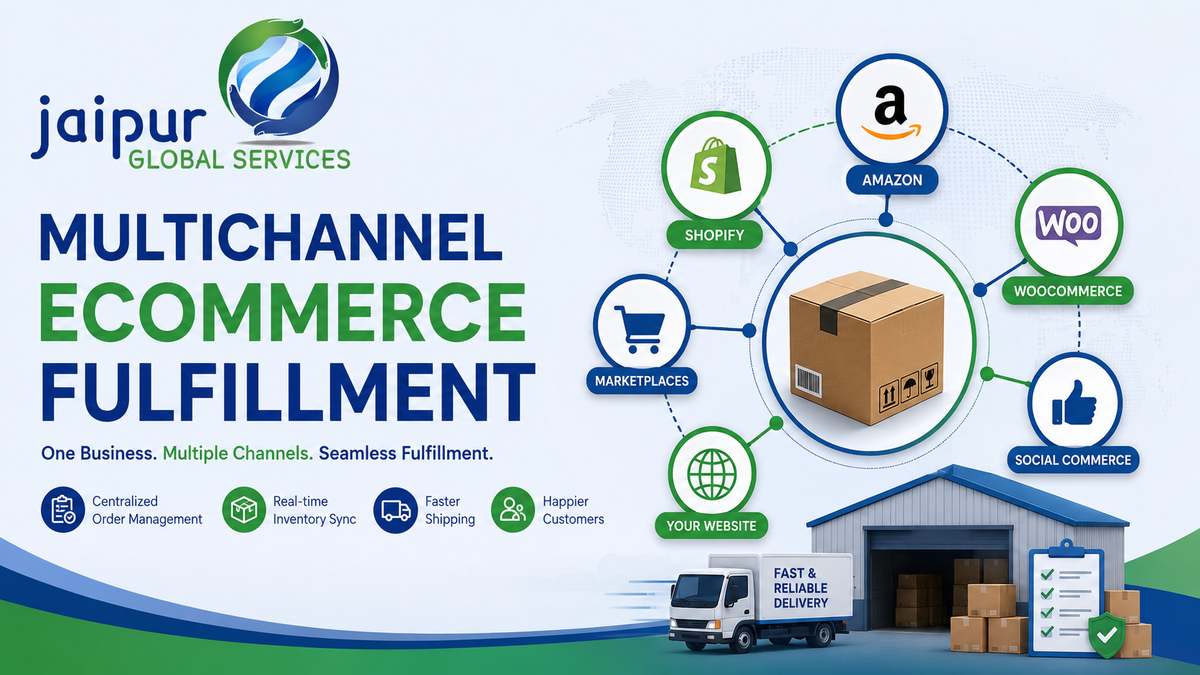
Selling on one platform is manageable. You know where your orders come from, you know your stock levels, and you know exactly how a package moves from your shelf to a customer's door.
The moment a second channel gets added — say, a Shopify store alongside an Amazon listing — things get more complicated. Add WooCommerce or another marketplace, and a business that once ran smoothly on spreadsheets can start losing track of stock, missing orders, or shipping late.
This is the operational problem that multichannel ecommerce fulfillment solves. It's not a single tool or service — it's the practice of coordinating order processing, inventory, shipping, tracking, and returns across every channel a business sells on, so that customers get a consistent experience no matter where they bought from.
This guide breaks down what multichannel fulfillment actually means, how it works day to day, where Amazon's Multi-Channel Fulfillment (MCF) program fits in, and how to decide what setup makes sense for your business.
What Is Multichannel Ecommerce Fulfillment?
Multichannel ecommerce fulfillment is the process of receiving, processing, packing, shipping, tracking, and handling returns for orders that come in from more than one sales channel — using one connected operational system instead of separate, disconnected ones for each channel.
Here's a simple example. A brand sells the same product on:
- Amazon
- Shopify
- WooCommerce
A customer buys it through any one of these. Somewhere behind the scenes, that order needs to be recognized, inventory needs to be checked and updated, the item needs to be picked and packed, a shipping label needs to be generated, and tracking information needs to reach the customer — regardless of which platform the sale came from.
It helps to separate three related terms that often get used loosely:
- Single-channel fulfillment — orders come from one platform only.
- Multichannel fulfillment — orders come from several independent channels, and the business works to keep inventory and processing coordinated across them.
- Omnichannel fulfillment — a step further, where the channels themselves are more deeply integrated (for example, buy online, pick up in store), not just the backend fulfillment.
For most growing ecommerce sellers, the practical challenge is the second one: keeping Amazon, Shopify, WooCommerce, and other channels working from accurate, shared inventory and order data.
Why Businesses Need Multichannel Fulfillment
Fulfillment complexity doesn't grow in a straight line as you add channels — it tends to grow faster than that. A few of the common pressure points:
- Multiple order sources. Orders arrive from different systems, each with its own format and notification method.
- Inventory fragmentation. The same SKU might be listed with different available quantities on different platforms if stock isn't synced.
- Manual data entry. Without automation, someone has to manually update stock counts or mark orders as shipped across every platform.
- Overselling and stockouts. If two channels both think they have 10 units left when only 6 remain, you end up cancelling orders.
- Different marketplace rules. Amazon, for instance, has its own performance metrics and shipping expectations that differ from a self-hosted WooCommerce store.
- Returns handled inconsistently. A return policy that works for your website may not match marketplace return requirements.
A business can be doing well on sales and still struggle operationally if fulfillment isn't organized — strong demand actually makes disorganized fulfillment worse, not better.
How Does Multichannel Ecommerce Fulfillment Work?
At a practical level, the fulfillment process for any order follows a similar path, regardless of which channel it originated from:
Customer places order → Order is received → Inventory is checked → Order is processed → Product is picked → Product is packed → Shipment is created → Order is shipped → Tracking is shared → Inventory is updated → Return is handled, if needed
What changes in a multichannel setup is that this loop needs to run consistently no matter which platform triggered it. That requires some form of synchronization between:
- Your ecommerce platforms and marketplaces
- Your inventory system
- Your warehouse or fulfillment provider
- Your shipping carriers
This synchronization can happen through a fulfillment platform, an inventory management tool, direct API integrations, or a fulfillment partner that connects to multiple sales channels. The method varies by business — the goal is the same: one accurate picture of stock and orders, visible everywhere.
Amazon Multi-Channel Fulfillment: What Does It Mean?
Amazon Multi-Channel Fulfillment (Amazon MCF) is a specific service, not a general term for "selling on multiple channels." It's a program that lets sellers use Amazon's fulfillment network to pack and ship orders that originate from outside Amazon — for example, an order placed on your Shopify store or your own website — using inventory you've stored in Amazon's fulfillment centers.
In other words, Amazon MCF is one possible tool for achieving multichannel fulfillment, not the definition of it. A business can absolutely coordinate fulfillment across Amazon, Shopify, and WooCommerce without ever using Amazon MCF, by working with a different 3PL or running fulfillment in-house.
Whether Amazon MCF is a good fit depends on things like your product eligibility, order volume, and how your inventory is currently positioned. Because Amazon updates program details, fees, and eligibility criteria over time, it's worth checking Amazon's official Seller Central documentation for the current terms before committing to it.
Amazon Multi-Channel Fulfillment for Shopify
For a Shopify store, the general idea behind combining it with Amazon MCF is this: your product inventory sits in Amazon's fulfillment network, and when an order comes in through Shopify, a fulfillment request is sent to Amazon, which then picks, packs, and ships that order using its own logistics network.
Some practical things a Shopify seller would want to think about before relying on Amazon multi channel fulfillment for Shopify orders:
- Whether your product catalog is eligible for MCF
- How inventory levels will be kept in sync between Shopify and Amazon
- How shipping speed and cost compare to your current shipping setup
- How order and tracking information flows back into Shopify for customer updates
- How returns from Shopify customers get processed
This isn't a decision to make lightly based on convenience alone — it's worth comparing against your existing fulfillment costs and delivery expectations first.
Amazon Multi-Channel Fulfillment for WooCommerce
The same underlying concept applies to WooCommerce stores. A WooCommerce seller may choose to use Amazon MCF to fulfill orders placed on their WooCommerce site, provided their inventory is stored with Amazon and their products qualify.
That said, WooCommerce sellers have other options too — including established 3PL providers or in-house fulfillment — and the right choice depends on order volume, product type, and how much operational control the business wants to retain.
The key point for both Shopify and WooCommerce sellers: Amazon multi channel fulfillment woocommerce and Shopify setups aren't a default or a requirement. They're one route among several, worth evaluating on their own merits.
How Shopify and Amazon Fulfillment Can Work Together
Zooming out a bit, it helps to think of your setup in three layers:
- Shopify — your direct-to-consumer storefront, where you control branding and customer experience.
- Amazon — a marketplace channel with its own audience, rules, and expectations.
- Fulfillment — the operational layer that gets the product to the customer, whichever channel the order came from.
The customer experience on Shopify and Amazon will naturally differ — different checkout flows, different customer expectations, different branding. What should stay consistent is the reliability of the fulfillment layer underneath: accurate stock, timely shipping, and clear tracking, regardless of channel.
How Multichannel Fulfillment Helps With Inventory Management
Inventory synchronization is arguably the single biggest operational challenge in multichannel selling.
Here's a simple illustration. Say a business has 100 units of a product in stock, and it sells through three channels:
- 40 units sell on Amazon
- 30 units sell on Shopify
- 15 units sell on WooCommerce
That's 85 units sold, leaving 15. If each channel isn't updated in near real time, one or more of them might still show more than 15 units available — leading to an order that can't actually be fulfilled.
Poor inventory management across channels tends to show up as:
- Overselling (accepting orders you can't fulfill)
- Unnecessary stockouts (holding back stock that could have sold elsewhere)
- Order cancellations
- Delayed shipments while stock gets sorted out
- Frustrated customers and negative reviews
Getting ahead of this requires centralized visibility into stock levels, accurate SKU mapping between platforms, some form of automated or semi-automated synchronization, and a process for reordering before you actually run out.
Multichannel Fulfillment vs Single-Channel Fulfillment
Factor
Single-Channel Fulfillment
Multichannel Fulfillment
Order sources
One platform
Multiple platforms and marketplaces
Inventory
Simpler to track
Needs synchronization across channels
Order management
Centralized by default
Requires coordination or a unifying system
Shipping
One set of rules and carriers
May involve different rules per channel
Returns
Single return process
Needs to accommodate different channel policies
Reporting
Straightforward
Needs consolidation across platforms
Operational complexity
Lower
Higher, and grows with each new channel
As order volume and the number of channels increase, the case for a more structured multichannel fulfillment approach gets stronger — the manual workarounds that worked at a small scale usually don't hold up as the business grows.
What Are the Benefits of Multichannel Fulfillment?
When it's set up well, a coordinated multichannel fulfillment approach can offer:
- Centralized operations — one place to see orders and inventory across channels
- Better inventory visibility — fewer surprises about what's actually in stock
- Faster order processing — less manual checking between systems
- More consistent fulfillment — customers get similar service regardless of channel
- Reduced manual work — less time spent on repetitive data entry
- Easier scaling — adding a new channel doesn't mean rebuilding your process from scratch
- Improved customer experience — fewer delays and mistakes
- Simplified tracking — customers get consistent shipment updates
- Better operational control — clearer picture of what's working and what isn't
- Room for ecommerce expansion — a stronger foundation for adding new marketplaces
None of these benefits are automatic. They depend on how well the fulfillment system is actually implemented — the tools and processes matter as much as the intent.
Common Multichannel Fulfillment Challenges
It's worth being honest about the friction points too:
- Inventory mismatches between platforms
- Managing stock across multiple warehouses or fulfillment locations
- Different shipping requirements per channel
- Marketplace-specific compliance rules
- Order synchronization delays or failures
- SKU mismatches between systems
- Returns that follow different rules depending on the channel
- Rising or unpredictable shipping costs
- Inconsistent tracking information reaching customers
- Manual processes that don't scale with order volume
- Gaps in system integration between platforms
- Order volume outpacing current fulfillment capacity
These challenges tend to compound as more channels are added — which is exactly why a deliberate strategy matters more than an ad hoc one.
How to Choose the Right Multichannel Fulfillment Strategy
There's no single fulfillment model that fits every ecommerce business. A useful way to think it through is by weighing:
- Number of sales channels you're actively running
- Monthly order volume
- Product size, weight, and fragility
- Where your customers are geographically located
- Customer delivery expectations
- Current inventory levels and turnover
- Return volume and complexity
- Number and location of warehouses
- What integrations your current tech stack supports
- Fulfillment costs relative to your margins
- Any product-specific restrictions (hazardous materials, size limits, etc.)
- Your business's growth plans for the next 1–2 years
Answering these honestly will usually point toward whether Amazon MCF, a third-party logistics (3PL) partner, in-house fulfillment, or some combination makes the most sense.
Amazon MCF vs Third-Party Fulfillment vs In-House Fulfillment
Factor
Amazon MCF
Third-Party Logistics (3PL)
In-House Fulfillment
Best suited for
Sellers already storing inventory with Amazon
Businesses wanting specialized logistics support across several channels
Businesses wanting direct control over their own operations
Inventory control
Limited — inventory sits in Amazon's network
Moderate — depends on the 3PL's systems
High — fully managed internally
Multi-channel support
Works for eligible off-Amazon orders
Generally built to support many channels
Depends entirely on internal setup
Scalability
Scales with Amazon's infrastructure
Scales with the 3PL's capacity
Scales only as fast as the business can build capacity
Technology/integration
Amazon's own systems and APIs
Varies by provider
Depends on internal tools
Operational control
Lower
Moderate
Highest
None of these is universally "better." A seller heavily invested in Amazon's ecosystem might lean toward MCF for simplicity. A brand selling across many channels with specific branding needs might prefer a 3PL. A business with unique packaging or handling requirements might keep fulfillment in-house. The right answer is specific to the business.
When Should a Business Consider Multichannel Fulfillment Services?
Some practical signals that it might be time to formalize your approach:
- You're selling on three or more channels
- Manually managing orders is starting to feel unsustainable
- Inventory regularly falls out of sync between platforms
- Customers are experiencing shipping delays
- The business is growing faster than your current process can handle
- Your team is spending too much time on repetitive order processing
- Returns are hard to track consistently
- You're planning to expand into another marketplace
- You want to centralize fulfillment operations rather than managing each channel separately
- Your current setup clearly can't scale with demand
If several of these sound familiar, it's a good time to look at dedicated multichannel fulfillment services rather than continuing to patch things together manually.
How JG Services Can Support Multichannel Ecommerce Businesses
Fulfillment is only one part of running a multi-channel ecommerce operation. The other part — managing your marketplace presence, listings, account health, and overall ecommerce strategy — is where Jaipur Global Services (JGS) focuses.
If your business is selling across Amazon, Shopify, WooCommerce, or other marketplaces, JGS's ecommerce and marketplace management experience can support the operational and strategic side of running those channels — while your actual fulfillment (whether through Amazon MCF, a 3PL, or an in-house warehouse) is handled by whichever provider fits your logistics needs.
It's worth being clear about this distinction: JGS focuses on ecommerce and marketplace management, not warehousing or physical fulfillment. The two work together — good marketplace management and good fulfillment both matter for a multichannel business to run smoothly — but they're not the same service.
(Note: this section should be finalized once JG Services' current, live service pages are confirmed — see the Internal Linking section below.)
A Practical Multichannel Fulfillment Checklist
Before adding another sales channel, it's worth running through:
- Is inventory synchronized across all current channels?
- Are SKUs mapped consistently between platforms?
- Can orders be received and processed from every channel?
- Is fulfillment automated wherever it makes sense to automate it?
- Can tracking information be shared with customers automatically?
- Are shipping costs across channels clearly understood?
- Are return policies clearly defined for each channel?
- Is your warehouse or fulfillment partner prepared for higher order volume?
- Can your current fulfillment model actually scale?
- Are marketplace-specific requirements understood and being met?
- Are customer service processes ready to handle multichannel questions?
- Is there a backup plan if a fulfillment issue happens?
Frequently Asked Questions About Multichannel Ecommerce Fulfillment
What is multichannel ecommerce fulfillment? It's the process of managing order receiving, processing, packing, shipping, tracking, and returns across more than one sales channel — such as Amazon, Shopify, and WooCommerce — using coordinated inventory and order systems rather than handling each channel separately.
What is Amazon Multi-Channel Fulfillment? Amazon MCF is a specific Amazon service that lets sellers use Amazon's fulfillment network to ship orders placed on sales channels outside Amazon, using inventory the seller has stored in Amazon's fulfillment centers, subject to Amazon's current eligibility rules.
Can Amazon MCF fulfill Shopify orders? Yes, this is possible for eligible sellers and products, provided inventory is stored with Amazon and the necessary setup is in place. It's one fulfillment option for Shopify stores, not a requirement, and sellers should check current Amazon eligibility criteria before relying on it.
Can Amazon MCF fulfill WooCommerce orders? It can, under similar conditions to Shopify — eligible inventory stored with Amazon and the required integration in place. WooCommerce sellers also have other fulfillment options, such as 3PLs or in-house fulfillment, depending on what suits their business.
What is the difference between Amazon MCF and a 3PL? Amazon MCF fulfills orders using Amazon's own fulfillment network and inventory stored there. A third-party logistics (3PL) provider is a separate, often more flexible logistics company that can offer customized fulfillment across multiple channels, sometimes with more control over branding and packaging.
How does multichannel fulfillment manage inventory? It relies on keeping stock levels synchronized across all sales channels, usually through an inventory management system, fulfillment platform, or direct integrations — so that available stock shown on each channel accurately reflects what's really in the warehouse.
When should an ecommerce business use multichannel fulfillment services? Typically once a business is selling on three or more channels, struggling to keep inventory synced manually, facing shipping delays, or finding that manual order processing can't keep up with growth. At that point, a more structured fulfillment approach becomes worth the investment.
Is multichannel fulfillment suitable for small businesses? Yes, though the right setup for a small business looks different than for a larger one. A smaller seller might manage two or three channels with lighter tools, while a larger operation may need more robust systems or a dedicated fulfillment partner. The principles — synchronized inventory, consistent processing — apply at any size.
Final Thoughts
Selling across Amazon, Shopify, WooCommerce, and other channels opens up real growth opportunities, but it also multiplies the operational work behind every order. The businesses that handle this well aren't necessarily the ones using the fanciest tools — they're the ones that treat fulfillment as a connected system rather than a set of separate tasks per channel.
Amazon MCF is one useful option for fulfilling off-Amazon orders, but it's not the only path, and it won't be the right fit for every business. Whether you end up using Amazon's network, a third-party logistics partner, or your own warehouse, the underlying goal stays the same: accurate inventory, reliable order processing, and a consistent experience for customers no matter where they bought from.
If you're managing multiple ecommerce channels and want support on the marketplace and account management side of the business, Jaipur Global Services works with ecommerce sellers navigating exactly this kind of multi-channel growth. It's worth a conversation if your marketplace operations are starting to feel harder to manage than they should be.